6 Best Build Your Own Boot Dryer Options for Ski Boots (2026)
Looking to build your own boot dryer for ski boots? Compare six real options, see what each is best for, and pick the right setup for your rack.
 By Claire Whitaker
Updated November 22, 2026
 By Claire Whitaker
Updated November 2026
If you want to build your own boot dryer for ski boots, the real question is what you are starting with: a ready-made unit that works like a DIY kit, or a bare heat source you are willing to wire and mount yourself. This list compares six products sold on Amazon that cover both paths, sorted by how well they fit a home or garage setup. Selection criteria: heat type, timer or auto-off features, capacity for multiple pairs, portability, and how owners describe their experience with ski boots and liners. For a deeper look, 7 Best Wood Stove Boot Dryer Options for Ski Boots (2026) covers this in detail.
Our top picks at a glance
- 1TOP CHOICEBest overallPEET Original Portable Electric Boot & Shoe DryerView on Amazon
- 2
 TOP CHOICEBest for two pairs at onceUpgraded Boot Dryer for Work Boots – Fast Drying Compact Shoe Warmer (2 Pair)View on Amazon
- 3
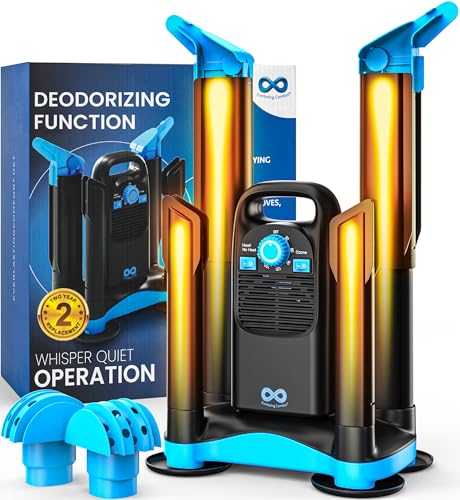
 TOP CHOICEBest for compact storageEverlasting Comfort Electric Boot Dryer for Work BootsView on Amazon
- 4
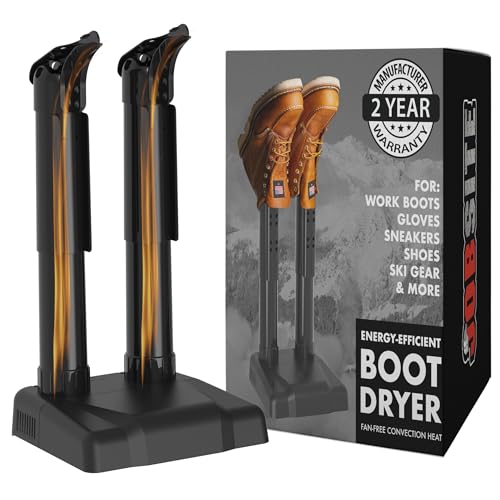 Best for low-noise overnight dryingJobSite Boot Dryer – Silent Shoe & Glove DryerView on Amazon
- 5
 Best for multi-gear dryingDryGuy Shoe, Boot, Garment & Gear Electric DryerView on Amazon
- 6
 Best for timed forced-air dryingSnowpea Electric Shoe & Boot Dryer for Work BootsView on Amazon
Our Top Picks
Quick Comparison
| Product | Best for | Key feature |
|---|---|---|
| PEET Original Portable Electric Boot & Shoe Dryer | Overall home use | Silent, always-on heat |
| Upgraded Boot Dryer for Work Boots | Drying two pairs | Adjustable tube design |
| Everlasting Comfort Electric Boot Dryer | Compact storage | Small footprint, glove drying |
| JobSite Boot Dryer | Quiet overnight use | Fanless 36W design |
| DryGuy Shoe, Boot, Garment & Gear Dryer | Mixed gear drying | Four ports, heat plus fan |
| Snowpea Electric Shoe & Boot Dryer | Timed drying cycles | 3/6/9 hour timer |
PEET Original Portable Electric Boot & Shoe Dryer
PEET Original Portable Electric Boot & Shoe Dryer, Silent & Always-On | Dries Boots, Shoes & Sneakers Overnight, Safe on All Materials, For Work, Hiking & Hunting Gear, Made in USA, 25-Yr Warranty
Best for: Overall home use
Suited to skiers who want a long-established design that runs unattended on a drying rack or floor. The manufacturer specifies it is made in the USA with a 25-year warranty.
Pros
- Runs silently and stays on until switched off
- Safe on boots, shoes and most gear materials, per the manufacturer
Cons
- Single-pair capacity per unit
Upgraded Boot Dryer for Work Boots – Fast Drying Compact Shoe Warmer (2 Pair)
Upgraded Boot Dryer for Work Boots – Fast Drying Compact Easy-to-Use Shoe Warmer Adjustable Tube Design – Fast Drying Shoes Dryers for Sneakers & Gloves, Ski Gears (2 Pair)
Best for: Drying two pairs
A fit for skiers with a second pair of boots or liners to dry between days. The adjustable tube design lets you match the heat to each boot.
Pros
- Two-pair capacity in one unit
- Adjustable tubes fit a range of boot shapes
Cons
- Bulkier than single-pair compact models
Everlasting Comfort Electric Boot Dryer for Work Boots
Everlasting Comfort Electric Boot Dryer for Work Boots (1 Pair, Black) | Portable Shoe Dryer, Compact Design, For Boots, Sneakers, Gloves & Winter Gear, Shoe Warmer, Glove Dryer, Everyday Use
Best for: Compact storage
Works for skiers short on closet or garage space who still want heat for boots and gloves. Owners often report it packs away easily between seasons.
Pros
- Compact footprint for tight spaces
- Handles gloves and winter gear as well as boots
Cons
- Drying time is longer on thick ski boot shells
JobSite Boot Dryer – Silent Shoe & Glove Dryer
JobSite Boot Dryer – Silent Shoe & Glove Dryer, Warmer, Deodorizer for Work Boots, Winter Gloves & Ski Boot Liners – Fanless, 36W
Best for: Quiet overnight use
A good match for skiers who dry gear in a bedroom, cabin or shared living space. The fanless 36W design runs without fan noise.
Pros
- Fanless operation keeps noise very low
- Low wattage suits a standard outlet
Cons
- Slower on fully saturated liners
DryGuy Shoe, Boot, Garment & Gear Electric Dryer
DryGuy Shoe, Boot, Garment & Gear Electric Dryer, Quick Drying for Ski, Work, Sports Equipment – Energy Efficient, Odor Eliminating Design, Home or Garage Use,4 Port, Heat + Fan (Dry time: 1-3hrs)
Best for: Mixed gear drying
Fits skiers who want one unit for boots, gloves, base layers and helmet liners. The four-port layout and heat-plus-fan design cover several items at once.
Pros
- Four ports handle a full set of gear
- Heat plus fan shortens drying time
Cons
- Fan noise is noticeable in quiet rooms
Snowpea Electric Shoe & Boot Dryer for Work Boots
Snowpea Electric Shoe & Boot Dryer for Work Boots Forced-Air | Forced-Air, 3/6/9H Timer, Auto Off, Portable & Compact, Silent, for Ski Gear, Cleats, Sneakers, Rain, Snow
Best for: Timed forced-air drying
Suited to skiers who want a set cycle and an automatic shutoff rather than checking boots by hand. The forced-air design and 3/6/9 hour timer are listed in the product name.
Pros
- Timer with 3, 6 and 9 hour settings
- Auto-off reduces the need to monitor it
Cons
- Timer settings are fixed, so you may need to adjust for very wet boots
Buying Guide
Heat Type and Airflow
Look at whether a dryer uses only warm air or a forced-air fan to move moisture out of the boot. Forced-air designs usually dry ski boots and liners faster, while gentler warming units are better for keeping leather and synthetic materials from getting too hot.
If you plan to build your own setup, pay attention to how the heat source is mounted so air can reach the inside of the boot and liner evenly.
Timer and Auto-Off Features
Timers and automatic shutoff help prevent overheating and make overnight use safer. Options with preset run times let you match the drying window to how wet your gear is.
A dryer without any safety shutoff may still work, but you will need to supervise it more closely, which matters if you leave it running in a garage or basement.
Capacity and Portability
Check how many pairs of boots, gloves, or liners a unit can handle at once. Multi-port designs are convenient for a family of skiers, while single-pair dryers take up less space.
Portability matters if you travel to the slopes or want to move the dryer between a garage, a mudroom, and a car. Compact units are easier to store between seasons.
Noise Level and Installation Needs
Some fan-driven dryers can be loud, so consider where you will run the unit, especially in a living area. Fanless or quieter designs suit spaces where you spend time nearby.
If you are building a DIY version, factor in wiring, mounting, and ventilation. Choose a ready-made model if you want to avoid electrical work altogether.
Material Compatibility and Odor Control
Ski boots, liners, and gloves use a mix of leather, foam, and synthetic fabrics, so confirm the dryer is designed to be safe for those materials. Gentle, consistent heat is generally kinder to boot liners than high heat.
Some models also add deodorizing features, which can help reduce odor buildup between uses.
FAQ
Can I build my own boot dryer for ski boots at home?
Yes, many people build a simple DIY boot dryer using a fan, a low-wattage heat source, and a safe enclosure. Make sure all electrical connections are properly insulated and that the unit has an automatic shutoff or timer. If you are not comfortable with wiring, a ready-made dryer is a safer choice.
How long does it take to dry ski boots?
Drying time depends on the dryer type, how wet the boots are, and the materials involved. Many electric dryers take from one to several hours, and some are designed to run overnight. Check the manufacturer’s guidance for your specific model.
Is it safe to leave a boot dryer running overnight?
Many electric boot dryers are designed for overnight use, especially those with auto-off or timer features. Choose a unit that is certified for unattended operation and place it on a stable, non-flammable surface. Avoid running any heater in a space with stored flammable materials.
Will heat damage my ski boot liners?
Excessive heat can shorten the life of liners and some boot materials, so look for dryers that use moderate, controlled warmth. Avoid placing boots directly next to a high-heat source. Following the dryer’s recommended settings helps protect your gear.
Can one dryer handle boots, gloves, and liners together?
Many boot dryers are sold as multi-purpose units that can also dry gloves, socks, and liners. Check the product description to confirm the ports or drying area suit the items you plan to dry. Smaller items like gloves often dry faster than full boots.
Conclusion
If you want a simple, ready-made option for overnight drying, a timer-equipped electric dryer with a proven track record is the easiest path. Families with several skiers may prefer a multi-port model that handles boots, gloves, and liners at once. We also found 6 Best Ways to Build a Boot Dryers for Ski Boots (2026) useful on this point.
If you enjoy hands-on projects and have basic electrical skills, a DIY build can work well, but prioritize safety features like auto-off and proper insulation. Choose the route that matches your comfort with wiring and how many pairs of gear you need to dry each day.
Related reading
- Make Your Own Boot Dryer: A Step-by-Step Guide for Ski Boots
- Boot and Glove Dryer DIY: Build a Safe Ski Dryer for Under an Hour
- Boot Dryer 3d Print: How to Make Your Own Ski Boot Dryer Vent Parts (2026)
- Will a Boot Dryer Kill Athlete's Foot? What Heat Can and Can't Do
About Claire Whitaker
Claire Whitaker is part of our editorial team and reviews and edits our rocky mountain ski trips guides, checking product details against manufacturer specifications and owner feedback.
About the author
Claire Whitaker writes reviews and buying guides for Skiing The Rockies.